
Basic sport-specific skills
Basic special sports skills have never been "just a few moves that need to be practiced when just getting started" in the public perception, but the smallest repeatable training unit in a specific sports event that highly matches the event's force logic and scene requirements. It is the core underlying support for all high-level sports performance.
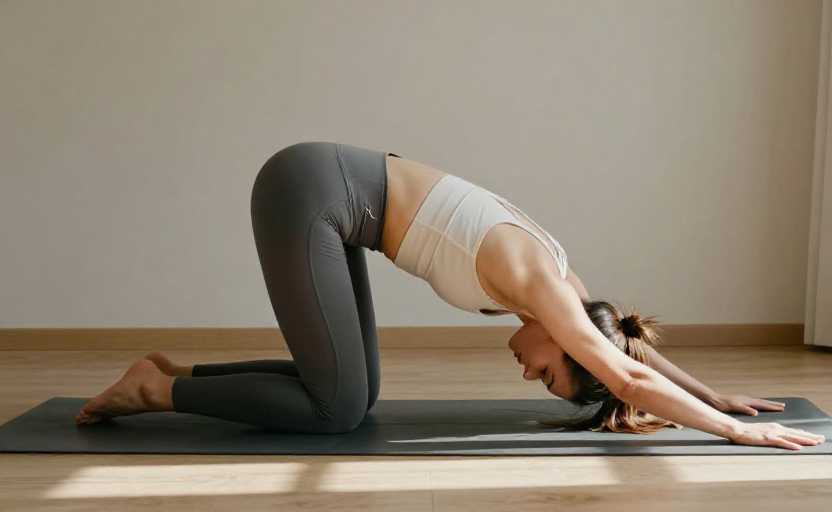
Last week at the badminton hall, I met a child who was entering junior high school. His parents spent a lot of money to hire a private tutor. In the first lesson, he asked for a jump kill lesson, saying, "My child is very strong, so I should imitate that handsome one." The coach rolled his eyes and asked him to do 10 forehand lobs first. The child relied solely on his arms to swing the racket, and his shoulders were so hunched that they were close to his ears. After 5 of them, he complained of shoulder pain. The coach said that this is the power mode. After practicing for another two months, I have to report to the rehabilitation department. I also have to perform jump kills. It is good to be able to send high and long balls to the baseline.
There is actually a lot of quarrel about this matter in the sports circle now. One group is the "basic foundation group". They think that in order to learn a sport, you have to study the basics for half a year. You can't touch any actual combat. If you don't practice the movements to the point of forming muscle memory, you are not allowed to play.; The other school is the "scenario-driven school", which says that it is completely useless to practice the basics. You have been practicing the forehand serve for three months, and you are still confused when someone serves you the ball in front of the net. It is better to just hit it and make up for what you are missing.
I stepped on this exact pit when I was rock climbing two years ago. At that time, I was very addicted to the game. I spent every day in the rock gym to hit the difficulty level. I always felt that practicing basic pinch points and foot stepping techniques was something only novices should do. As a result, I was stuck at the V3 level for three months. I tried every trick but could not get up. Later, I was forced to practice the basics for three months by the line setter in the gym. I was not allowed to touch any difficulty line every day. I just practiced the force of the open hand pinch point and the angle control of the foot contact. Even changing feet required every movement to be accurate. After practicing, I could find the center of gravity of the foot with my eyes closed, and then I crossed the line. I touched the threshold of V4 in half a month.
But if you want me to side with the "basics", I don't agree with it either. I have a friend who practices basketball. His coach held him in the air and practiced dribbling for a year. He slapped the ball against the wall every day. Now he is on the court for half a game. When someone comes up to press him, his first reaction is to hold the ball. He cannot change direction while moving, which is a waste of practice. You see, the core of basic special skills is the word "special", which is not the same thing as general physical fitness at all - just because you can squat 200 kilograms, it does not mean that you are right to run on the ground to exert force during a sprint. ; Just because you can do 100 push-ups doesn't mean that your swimming strokes and hugs are fine. Without the "basis" of the project scenario, it is not really a specialized skill at all.
I recently received a rehabilitation consultation from a basketball enthusiast. I have been playing basketball for eight years in my 30s, and my knees hurt every day. When I took a film, it showed that the meniscus was more worn than a 60-year-old person. I asked him to make a three-step basket. Good guy, not to mention the twist, when he landed, his knee was directly buckled inward, with his entire weight on his left knee. It’s no wonder it didn’t hurt after playing for a long time. The first item of the rehabilitation plan given to him was not to engage in any confrontation. He first practiced the basic take-off and landing pattern for two months. Each time he landed, his knees and toes were required to be in the same direction, with the center of gravity in the foot. He would train until his muscles formed memory before playing.
To put it bluntly, basic special skills are like the horizontal and vertical strokes when you learn to write calligraphy. No matter how gracefully you write, the horizontal strokes are uneven and the vertical strokes are not straight, and the characters you make have no bones. Of course, there is no need to stick to the strokes and practice for three or four years before you dare to write the whole character. After practicing for two months, try to write the whole character. If you write it crookedly, come back and adjust the strokes, which will make your progress faster. As for whether to study the basics for three months first or practice for a week and then start actual combat, there is no standard answer. If you just want to sweat and have fun on the weekend, how can you have fun? ; If you really want to get a feel for this project, avoid suffering sports injuries, and improve your skills, then going back and picking up the basic movements when you have nothing to do is definitely the best investment-output ratio.
Disclaimer:
1. This article is sourced from the Internet. All content represents the author's personal views only and does not reflect the stance of this website. The author shall be solely responsible for the content.
2. Part of the content on this website is compiled from the Internet. This website shall not be liable for any civil disputes, administrative penalties, or other losses arising from improper reprinting or citation.
3. If there is any infringing content or inappropriate material, please contact us to remove it immediately. Contact us at:
