
Strength training increases metabolism
Strength training can indeed improve metabolism in the long term. On average, for every 1 kilogram of pure muscle added, the body's daily resting consumption will increase by 6-10 calories. This benefit is effective 24 hours a day, even if you are lying down to sleep or slumped on the sofa to watch TV series.
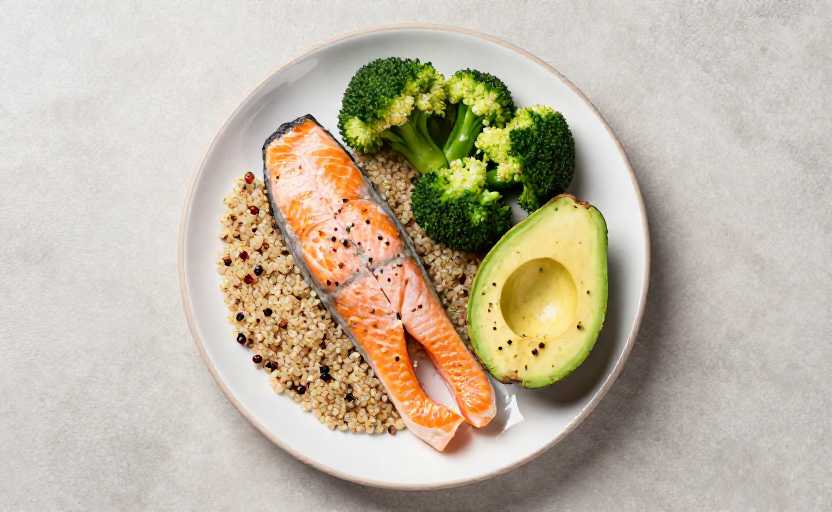
Some people may roll their eyes when they see this: I don’t want to build muscles, and if I gain that much energy, it won’t be enough for me to drink a sip of Coke, so what’s the use? Alas, this is really not entirely correct. People who hold this view basically narrow down the metabolic benefits of strength training - they only focus on the static number of resting metabolism, and do not take into account other hidden consumption bonuses at all.
I once took care of a 32-year-old female Internet operator. She lost weight purely by running. She couldn't hit 5 kilometers every day. She also ate strictly 1,200 calories. She was stuck at 110 pounds for three months. If she ate a little more, her weight would jump up the next day. Later, I asked her to add strength training three times a week, focusing on large muscle groups such as hips, legs, shoulders and backs. She only had to change her running from 5 kilometers a day to twice a week. She only added two eggs and a carton of milk a day to her diet. In less than two months, she lost 4% of her body fat and her weight dropped to 104 pounds. Last week, she showed off to me that she went to eat hot pot with colleagues on the weekend and showed off a plate of tripe and two plates of fat beef. The next day she weighed herself and her weight did not increase at all.
You said this is just based on the static consumption of the extra 1 kilogram of muscle? It’s definitely not enough. There is also the “post-training fat-burning effect” brought about by strength training, which is academically known as EPOC (excess post-exercise oxygen consumption). Unlike aerobic training, where consumption quickly drops off after stopping aerobic training, after medium-to-high-intensity strength training, the body needs a dozen or even 24 hours to repair damaged muscle fibers and restore hormone levels. During this period, it will consume more calories than usual. The last time I practiced 8 sets of deadlifts, I got up hungry in bed and gnawed two corns. The next day, I weighed 8 taels lighter. This is how this thing works.
Of course, I have also met a girl who has been practicing strength training for half a year and said that her metabolism has not increased at all. When I asked her later, I found out that she still only ate 1,000 calories a day and was reluctant to drink a protein powder after training. The dumbbells she lifted during training were still 2 kilograms. She did not feel any soreness after doing a set of movements for twenty times. Her muscles were not stimulated and were even being broken down by dieting. It is strange that her metabolism can be increased.
There are actually different views in the fitness circle now. There is a group of bloggers who do lightweight fitness. They say that ordinary people do not need to pursue how much muscle gain they have. As long as strength training can maintain the existing muscle mass, it is enough - especially those who have lost weight through dieting. Basic Generation Xie is already 200-300 calories lower than people of the same weight. If you eat a little more, you will rebound. At this time, even if you only practice bodyweight squats and push-ups to prevent further muscle loss, it is equivalent to "supporting" your metabolism. It is better than the more you lose weight, the easier it is to gain weight. There is also a group of scholars who study "metabolic flexibility" who have updated their views. They believe that the biggest benefit of strength training is not static consumption at all, but that it makes the body's energy supply regulation of sugar and fat more flexible. When you eat too much, you will not convert excess calories into fat and store them, but prioritize muscle repair for daily consumption. This is the core reason why everyone always says "you will not gain weight easily if you practice strength".
Don't tell me, I have experienced it myself. Two years ago, when my body fat was 30%, I would gain 2 pounds the next day if I ate half a pizza. Now I have 6 kilograms more muscle mass than at that time. I eat a barbecue ice cream on weekends, and my weight basically does not fluctuate the next day. I don't have to count calories. Isn't this the confidence given by improved metabolism? Don’t worry that girls will turn into King Kong Barbies if they practice strength. The testosterone level of us girls is only one-twentieth of boys. It is extremely difficult to grow muscles. If you can gain 3 kilograms of pure muscle after two or three years of training, you are considered a gifted person. At most, the muscles will become tighter. The waist will be thinner when wearing jeans and the shoulders will look better when wearing a T-shirt. It is impossible to get any stronger.
In the final analysis, strength training to improve metabolism is not a metaphysics, and it is not as impressive as it is. You don’t have to pursue a heavy weight, as long as you can feel the soreness and swelling of the target muscle groups during training. Eat enough protein of 1.2-1.6 grams per kilogram of body weight every day for two months. Feel the muscles on your arms to see if they are tight. If you eat too much, will you gain two or three pounds at a time? The numbers on any body fat scale are more accurate than any other.
Disclaimer:
1. This article is sourced from the Internet. All content represents the author's personal views only and does not reflect the stance of this website. The author shall be solely responsible for the content.
2. Part of the content on this website is compiled from the Internet. This website shall not be liable for any civil disputes, administrative penalties, or other losses arising from improper reprinting or citation.
3. If there is any infringing content or inappropriate material, please contact us to remove it immediately. Contact us at:
