
Is it better to sweat during aerobic exercise or not to sweat
There is no absolute good or bad. The amount of sweat has never been the core criterion for measuring the effect of aerobic exercise. Whether you should sweat or not depends entirely on your physique, exercise goals and the current exercise environment.
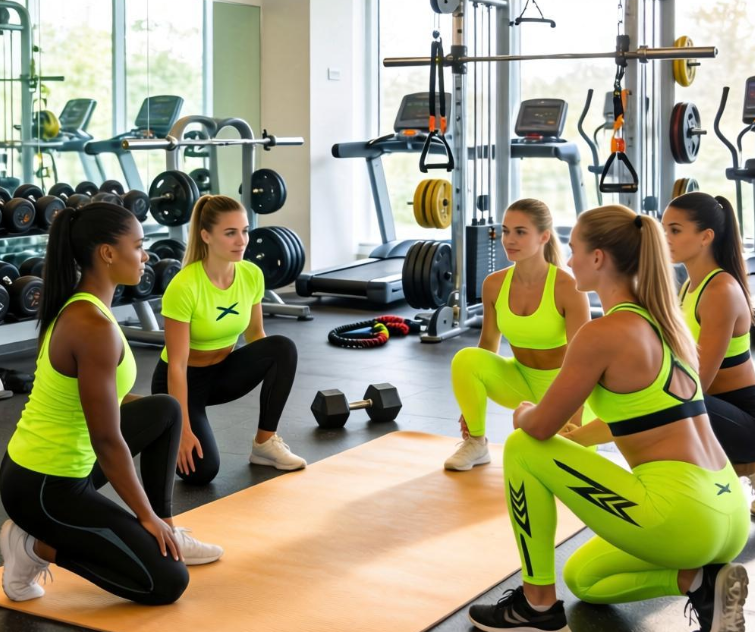
I ran into two girls arguing over this matter at the gym a few days ago: they had been riding the elliptical machine together for 40 minutes. One's T-shirt was so wet that water could be squeezed out, and the other only had a little sweat on her temples. The one who sweats a lot complains that the other person must have failed to exert his strength and that the training is in vain; the one who sweats less laughs at the other person because he has poor heart and lungs and sweats so much because he gasps every time he moves. No one can convince anyone.
Speaking of it, the concept that "exercise must be sweating to be effective" is really deeply rooted in the hearts of the people. When I first got into fitness, my old coach always said, "Don't finish class until you have sweated thoroughly." From the perspective of this school, it is not unreasonable: Sweating is essentially the body's temperature regulation mechanism. During exercise, muscle heat production increases and body temperature rises, which triggers perspiration to cool down. To a certain extent, it does reflect that you have moved to a certain intensity. Moreover, many people sweat after exercising and take a shower. Their whole body feels light, as if all the metabolic waste has been excreted. This subjective feeling of refreshment is also true. But there is an obvious bug here: if you wear a sweat suit or wrap a plastic wrap to cover up the sweat, will it be counted? I once had a student who was eager to lose weight. In the summer, he wore a sweat suit and danced for 40 minutes. He went on the scale and lost 2.8 pounds. He drank two bottles of sports drinks and regained all the weight. He almost felt dizzy and squatted on the ground due to heat stroke. This kind of sweating was pure suffering, and the fat-burning effect was not increased even half a cent.
In the past two years, after immersing myself in exercise physiology materials and chatting with enthusiasts of different levels around me, I realized that the standard "sweating = effective" is too rough. The current general consensus in the industry is that the amount of sweat is separated from the effect of exercise - there are too many variables that affect sweating, and it cannot be used as a unified standard. Take individual differences as an example. People who are born with well-developed sweat glands may sweat all over their heads after walking briskly for 10 minutes. People with underdeveloped sweat glands may only feel a slight fever in their backs after running for half an hour. Obese people have thick fat layers and have difficulty dissipating heat. The same exercise intensity will The amount of sweat is definitely more than that of a thin person; not to mention environmental factors. On a 35-degree day in the summer, you can sweat even standing outdoors. In the winter, when it is minus 10 degrees and you run 5 kilometers, you may only get some heat on your forehead. You can’t say that winter exercise is all in vain, right? I know an older brother who has been running marathons for 8 years. He usually practices 6-speed running for 1 hour, and only a small area on his neck and back gets wet. His static oxygen uptake can reach 58. Compared with many novices who can't stand upright after running for half an hour, and sweat flows into their eyes, the exercise efficiency is more than a half hour higher.
If you are really confused, why not go back and see what your own needs are. If you just want to take a walk after a meal to stretch your muscles, then even if you walk for half an hour without breaking a sweat, that’s totally fine. It’s meant to be relaxing, so you don’t have to force yourself to practice until you’re sweating profusely. If your goal is to burn fat or improve your heart and lungs, don't focus on sweating, but touch your heart rate. As long as your heart rate is maintained within 60%-70% of your maximum heart rate (220 minus your age), even if you don't sweat at all, the amount of fat you should burn will not be less, and your heart and lungs can be effectively stimulated. There are also friends with special physiques. For example, if you are weak in energy, you will be sweating and panting heavily when you move even a little bit. Don't insist on pursuing "sweat volume". Exercise until your body is slightly warm and stop. On the contrary, it will be more healthy. If you are born with underdeveloped sweat glands, don't worry if you don't sweat for a long time after exercising. As long as you don't feel chest tightness or discomfort after exercise, there will be no problem.
I have been practicing for almost 7 years. When I run 5 kilometers in the summer, half of my quick-drying clothes will be wet. In the winter, when I run 10 kilometers in subzero temperatures, my face is numb from the cold and I only sweat a little on my forehead. I never feel that my training is in vain just because I sweat less today. Every time you see that your resting heart rate has dropped by two beats, or that you can now run at a pace that was tiring before, you will know that the effect is in place. Really, don’t be fooled by the marketing rhetoric of “sweating and burning fat” on the Internet. When it comes to aerobic exercise, being comfortable, able to persist, and able to achieve your own goals are more important than how much you sweat.
Disclaimer:
1. This article is sourced from the Internet. All content represents the author's personal views only and does not reflect the stance of this website. The author shall be solely responsible for the content.
2. Part of the content on this website is compiled from the Internet. This website shall not be liable for any civil disputes, administrative penalties, or other losses arising from improper reprinting or citation.
3. If there is any infringing content or inappropriate material, please contact us to remove it immediately. Contact us at:
